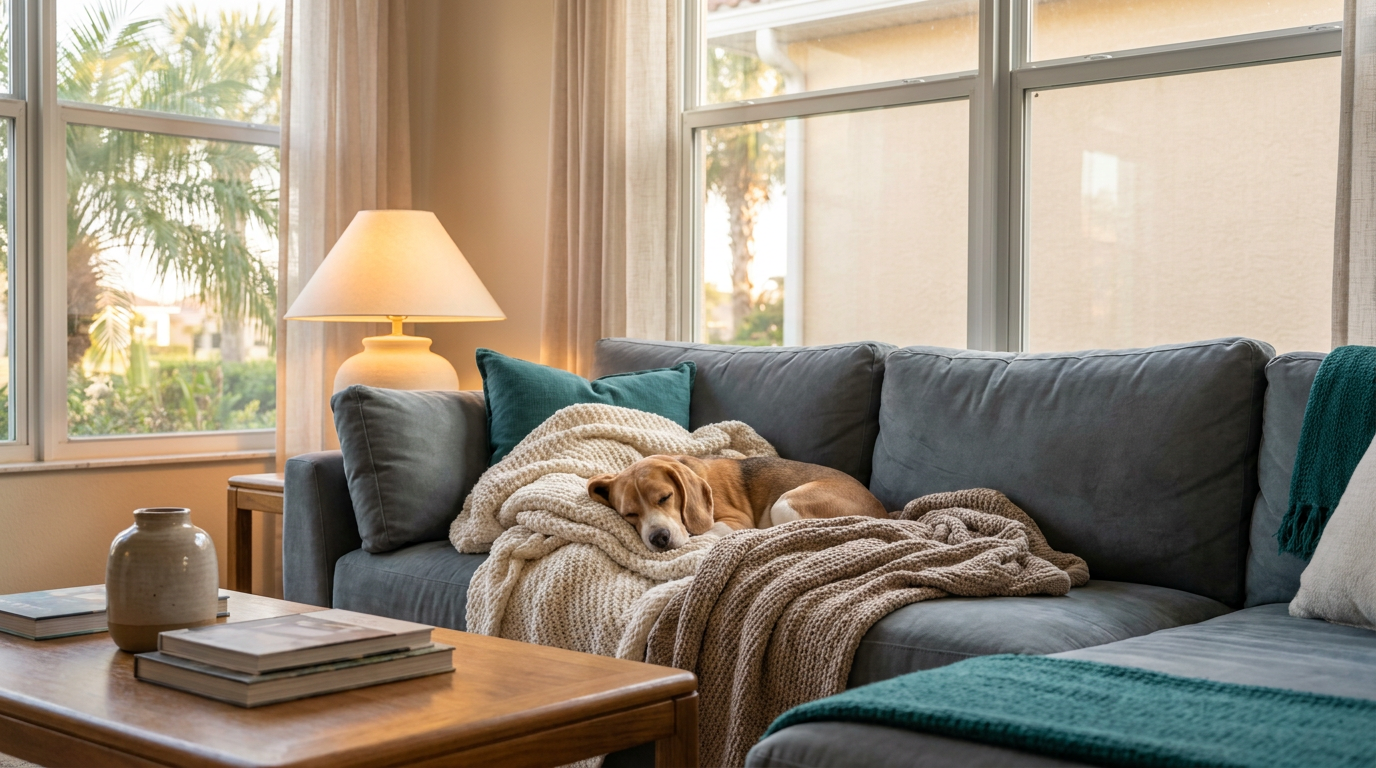
ESA Dogs in Florida: Best Breeds for Apartment Living and Anxiety Support
For many Floridians managing anxiety, an emotional support animal offers a source of steady companionship that fits into daily life at home. But not every dog breed is equally suited to apartment living, condo association rules, or the compact spaces common across Florida's rental market. Choosing well matters, both for your dog's wellbeing and for a smoother relationship with your landlord.
This guide walks through some of the most commonly recommended esa dog breeds florida renters turn to, with an emphasis on temperament, size, and adaptability to shared or multi-unit housing. It is not a ranking of "best" dogs in any absolute sense; every household and every dog is different, and a licensed mental health professional is the only one who can determine whether an ESA is clinically appropriate for you. For a full breakdown of how Florida ESA eligibility works, see our guide on anxiety and ESA eligibility in Florida.
What Makes a Dog a Good Fit for Florida Apartment Living
Before diving into specific breeds, it helps to understand what "apartment-friendly" actually means in a Florida context. Florida's rental housing stock leans heavily toward multi-unit buildings, condos, and HOA-governed communities, many of which enforce noise ordinances, shared walkways, and close-quarters living with neighbors. A dog that does well in this setting tends to be low-to-moderate in energy indoors, not prone to excessive barking, comfortable in close proximity to strangers and other pets, and tolerant of Florida's heat and humidity during outdoor breaks.
It is worth noting that under the Fair Housing Act, an emotional support animal is generally not subject to a housing provider's breed, weight, or size restrictions once a valid accommodation request has been properly documented, per HUD's FHEO-2020-01 guidance. That said, landlords retain narrow rights to deny a specific animal if it poses a direct threat or an undue financial and administrative burden, and disputes do arise in practice. For the specifics on how breed restrictions and ESA status interact in Florida, and what to do if a landlord pushes back, see breed restrictions and ESA dogs in Florida. If you run into a dispute you can't resolve directly with your housing provider, a Florida-licensed attorney familiar with fair housing law is the right resource, not general guidance like this article.
The Best ESA Dog Breeds for Florida Apartments
1. Cavalier King Charles Spaniel
The Cavalier is consistently mentioned among small esa dogs well suited to close-quarters living. Bred historically as a companion lapdog, the breed tends to be affectionate, quiet indoors, and eager to stay near its person, traits many people find calming to have close by during anxious moments.
Their moderate exercise needs also make them workable for renters without easy access to a yard, since a couple of short walks a day plus indoor play is often enough. Florida's heat is generally manageable for the breed provided walks happen in cooler morning or evening hours.
Practical takeaway: A good option for apartment dwellers who want a dog that is naturally low-key indoors and thrives on physical closeness rather than high-energy activity.
2. French Bulldog
French Bulldogs have become one of the most popular small breeds in urban and suburban Florida housing, largely because of their compact size and famously easygoing temperament. They tend to bond closely with their owners and are often described as more "velcro" than independent, which some people find reassuring during anxious periods.
One important consideration for Florida specifically: as a brachycephalic (flat-faced) breed, French Bulldogs can struggle with heat and humidity and are prone to respiratory issues. Anyone considering this breed should plan for limited outdoor time during peak Florida summer heat and prioritize air-conditioned environments.
Practical takeaway: Well suited to indoor-focused apartment life, but requires deliberate heat management given Florida's climate.
3. Shih Tzu
Shih Tzus were bred for centuries specifically as companion animals, and that heritage shows in their temperament: friendly, adaptable, and generally content to spend most of the day indoors near their owner. Their small size and modest exercise requirements make them a practical fit for condos, studio apartments, and buildings with limited outdoor access.
They also tend to be less prone to nuisance barking than some other small breeds, which can matter in HOA or multi-unit buildings with noise policies. Regular grooming is a commitment worth planning for, since their coat requires upkeep, but this is a manageable tradeoff for many renters.
Practical takeaway: A steady, quiet companion that adapts well to small indoor footprints and doesn't demand extensive outdoor space.
4. Pug
Pugs are another small breed frequently recommended for apartment living because of their compact size, sociable nature, and general comfort with a slower-paced, indoor lifestyle. Many owners describe pugs as emotionally attuned companions who enjoy simply being present with their person.
As with French Bulldogs, pugs are brachycephalic and can be sensitive to Florida's heat and humidity. Air conditioning, shaded or early/late outdoor breaks, and attentive care during the hottest months are important parts of responsible pug ownership in this climate.
Practical takeaway: A companionable, low-exercise breed for indoor living, with the same Florida-specific heat precautions as other flat-faced breeds.
5. Miniature or Toy Poodle
Poodles are often cited for their intelligence, trainability, and relatively low-shedding coat, which can be a practical consideration for renters concerned about allergens or lease cleanliness clauses. Miniature and toy sizes in particular scale well to apartment life while retaining the breed's attentive, people-oriented temperament.
Because poodles are highly trainable, many owners find it easier to reinforce calm indoor behavior and manageable leash habits, both of which support smoother day-to-day life in shared buildings. Regular mental stimulation is worth building into a routine, as the breed's intelligence can translate to restlessness if under-engaged.
Practical takeaway: A strong option for renters who want trainability and a lower-shedding coat alongside a genuinely people-focused temperament.
6. Bichon Frise
Bichon Frises are small, cheerful, and generally well suited to close cohabitation, often described as adaptable to a wide range of living situations including compact apartments. Their friendly disposition tends to extend to strangers and other animals, which can ease day-to-day interactions in shared hallways, elevators, and common areas.
Their coat, like the poodle's, sheds minimally, which some renters find easier to manage in a rented unit. As with other small companion breeds, they generally do best with consistent routines and don't require extensive yard space to stay content.
Practical takeaway: A sociable, adaptable choice for buildings with frequent shared-space interactions with neighbors and other pets.
7. Chihuahua
Chihuahuas are among the smallest dog breeds and, for that reason alone, are practical for compact apartments and buildings with strict size guidelines for pets in general (though as discussed above, ESAs are typically not subject to those caps once properly documented). Many owners describe a strong, focused bond between Chihuahuas and their primary caregiver.
Because they can be more reserved or vocal around unfamiliar people, early and consistent socialization is worth prioritizing for anyone in a building with regular foot traffic, shared elevators, or frequent visitors. With that groundwork, many Chihuahuas settle comfortably into apartment routines.
Practical takeaway: An extremely compact option, best paired with intentional socialization given the breed's tendency toward wariness with strangers.
8. Maltese
The Maltese is a small, affectionate breed historically bred purely for companionship, and that focus on human closeness is often exactly what people look for in a support animal. Their size makes them easy to manage in tight indoor spaces, and their exercise needs are modest.
Like several breeds on this list, the Maltese's coat requires regular grooming attention. Their generally calm indoor demeanor, combined with a strong attachment to their owner, makes them a frequently recommended pick among best esa dog apartment florida options for renters focused on emotional companionship over high activity.
Practical takeaway: A classic companion breed built around closeness and low physical demands, ideal for smaller units.
9. Greyhound (for those with more space)
It may be surprising to see a larger breed on this list, but greyhounds are often described by owners and trainers as surprisingly well suited to apartment life. Despite their size, greyhounds are famously low-energy indoors, sometimes nicknamed "45-mph couch potatoes" for their tendency toward long naps between short bursts of activity.
Retired racing greyhounds in particular are frequently already accustomed to crate life and calm indoor routines, which can translate well to apartment settings. Because of their size, it is especially important to check with your specific housing provider and review any documentation requirements, since larger dogs sometimes draw more scrutiny even when ESA protections apply. The breed restriction guidance linked above covers how these conversations typically play out in Florida.
Practical takeaway: A calm, quiet housemate for renters with a bit more square footage, despite the breed's larger frame.
Choosing the Right Breed for Your Situation
The "best" ESA dog breed is ultimately the one that fits your specific living space, daily routine, and the kind of support you find most grounding. Some people are drawn to the quiet, close-contact companionship of toy breeds; others feel more supported by a calmer, larger dog whose steady presence fills the room. A visit with a reputable breeder or, just as often, a local rescue or shelter is a practical way to meet a range of temperaments before committing.
For a broader look at emotional support animals beyond dogs, including cats and other species that may suit smaller Florida apartments, see our guide on the best emotional support animals for Florida apartments.
Florida's Legal Requirements for a Valid ESA Letter
Choosing the right breed is only part of the picture. Under Florida Statute 760.27, a valid ESA letter must be issued by a practitioner licensed in Florida, or by an out-of-state provider who has an established, prior in-person relationship with the client of at least 30 days. Letters from online-only services with no Florida licensure and no prior relationship to the client do not satisfy this requirement, regardless of how the animal or letter is marketed.
It's also worth being direct about what an ESA letter is not. There is no such thing as an official "ESA registry," "ESA certification," or national ESA database; HUD has explicitly warned that these are not legitimate and do not confer any legal status. An ESA letter is simply documentation, issued by a licensed mental health professional, indicating that an emotional support animal may be appropriate for a specific individual's circumstances. It's also worth noting that ESAs no longer carry the air-travel protections they once did: the Department of Transportation removed ESAs from the Air Carrier Access Act in 2021, so airlines today generally treat ESAs as ordinary pets. Approval for an ESA letter is never automatic or guaranteed; a licensed clinician evaluates each person individually before determining whether an ESA is therapeutically appropriate.
Frequently Asked Questions
Do landlords have to accept small ESA dog breeds in Florida?
Generally, once a tenant has submitted a valid accommodation request supported by proper documentation, a housing provider cannot deny the request based on breed, size, or weight alone, per HUD's Fair Housing Act guidance. There are narrow exceptions, such as a documented direct threat to health or safety. If you encounter resistance, our guide on breed restrictions and ESA dogs in Florida covers the process in more detail, and a Florida-licensed attorney can advise on your specific situation.
Are small dogs better for anxiety support than larger breeds?
Not necessarily. Many people find comfort in a small dog's portability and close physical presence, while others respond just as well, or better, to a calmer, larger dog. What matters most is the individual bond and the dog's temperament, not its size. A licensed mental health professional can help you think through whether an ESA, and what kind of animal, may be appropriate for your specific needs.
Can I get an ESA letter for a dog I already own?
Yes. An ESA letter is documentation about your therapeutic relationship with your clinician and your need for the animal's support; it does not require adopting a new dog or purchasing a specific breed. Many people already have a dog that provides meaningful support before ever pursuing formal documentation.
Disclaimer: This article provides general, informational content about ESA dog breeds and Florida housing considerations and should not be considered medical, mental health, or legal advice. Whether an emotional support animal, and which breed or species, may be appropriate for you is a determination only a licensed mental health professional can make after an individual evaluation. Florida Statute 760.27 requires that ESA letters be issued by a Florida-licensed clinician or a provider with an established prior in-person relationship with the client. For housing disputes or questions about your rights under the Fair Housing Act, consult a Florida-licensed attorney.
Ready to start your Florida ESA letter?
Licensed Florida clinician review. Compliant with state law.
Get My Florida ESA Letter